Showing posts with label 9mm. Show all posts

Sunday, February 16, 2014

I Need Some 9's: Okay, Sir, What Kind?


I have heard of this question and, sometimes, smart ass answer combination. It seems like some dealers like making people look stupid. On the other hand, it is, all the same, a valid question. In the picture above, you see 22 different types of ammunition that fall under the "9mm" category. Understandably confusing right? 99% of the time, when a buyer asks for 9mm ammunition, they are referring to #9 on the image: the 9X19 Luger or 9mm Luger. In this episode of Blued Barrel, we will discuss the history of the 9mm cartridges and how some of the more popular ones came about. Let's dive in.

If you are not familiar with ammunition and 9mm is just a number to you, then let's start there. Ammunition is measured in either imperial or metric caliber. For example: Here in the States, we measure our ammunition typically in inches. Therefore, you get ammo such as .38 .380 .50 .22 etc. The rest of the world uses the metric system which results in 7mm, 8mm, 9mm and so on. Both of these sets of numbers are measurements for the same thing: the diameter of the projectile in ammunition. When we refer to 9mm, we mean that the projectile is 9mm in width or .355 inches wide. The standard 9mm Luger was developed in Germany, thus the "mm" designation.

Most metric ammunition also has a measurement for the brass itself. For example: 9mm Luger is also known as 9x19. This means that the projectile is 9mm wide and the brass casing is 19mm long. You also have other ways of identifying ammunition. In addition to measurements, ammunition also may have an additional designation, such as: .380 ACP, 7.62 NATO and 9mm Makarov. These designations explain design features, what firearm they were designed for or what action they were meant to work with. ACP stands for Automatic Colt Pistol, NATO stands for North Atlantic Treaty Organization and is their standard ammo, Makarov is the 9mm cartridge that was designed specifically for the Russian Makarov pistol.

Now, with that all behind us, let's explore some more.

The number one 9mm cartridge (for the 23,565 time) is known as (get ready for it) 9mm, 9mm Luger, 9x19 Parabellum, 9x19, 9x19mm, 9mm NATO and 9mm Para. I'm sure I've left something out but you still should get the point.

The 9x19mm Parabellum, as it was first called by Georg Luger who designed the cartridge for the German Luger P.08. The company that Georg Luger worked for, DWM, gave the cartridge the "Parabellum" designation. Parabellum stands for "Prepare for War" which was part of the company motto: Si Vis Pacem, Parabellum. "If you wish for peace, prepare for war". Thus the 9x19mm Parabellum was born. The CIP (Commission internationale permanente pour l'épreuve des armes à feu portatives, or Permanent International Commission for Firearms Testing) was the organization to designate the cartridge as 9mm Luger and the name has stuck since then. Currently, the 9mm Luger is the most popular and prevalent military handgun cartridge in use today, according to Cartridges of the World. The effectiveness and low cost also attribute to the popularity to this day. Most all manufacturers have firearm models that utilize the 9mm Luger cartridge.

Luger P.08 1917

Another of the well known 9mm rounds is the 9x18 Makarov. This cartridge was designed along with the Makarov PM pistol to be specifically unusable by NATO forces during the later part of WWII and the Cold War. The Makarov round used a slightly larger diameter projectile along with the shorter casing to make it incompatible. This round was developed as a replacement for the Tokarev TT-33 semi automatic pistol and it's 7.62x25mm Tokarev round.

Tokarev TT-33


There is also the .38 S&W Special, one of the most popular revolver rounds since its inception in 1898. The .38 Spl cartridge was a replacement for the .38 Short Colt and .38 Long Colt, initially a black powder round that was switched to smokeless powder within a year of its design. From 1920 all the way up to 1990, this cartridge was used as a standard in Law Enforcement sidearms. This "9mm" cartridge is actually .357 inches wide, which leads me to...

Smith and Wesson Model 27 "The original .357 Magnum"

The .357 Magnum round also became a popular cartridge. Besides being the cartridge that started the Magnum era, It was designed with the .38 Special casing but had considerably more power at 100 yards than the .38 at the muzzle. Because of the closeness of the sizes of the rounds, there were problems with the .357 being used in the .38 firearms. This was a bad thing which could cause, shall we say, "catastrophic failures". Thus the .357 was given a slightly lengthened case, which allowed the underpowered .38 to be used in the .357 firearms safely, but prevented the inverse from happening, and thus the damage. This "9mm" round is widely touted as being a very powerful "Man-Stopper".

These are some of the most popular and well known 9mm diameter rounds, but here are some more along with the firearms that they were designed for/with...

9x18mm Ultra - Walther PP Super


.380 ACP (A.K.A., .380 Auto, 9mm Browning, 9mm Corto, 9mm Kurz, 9mm Short, 9×17mm and 9 mm Browning courto) - Walther PPK


9mm Glisenti - Glisenti Model 1910


.357 SIG - Sig Sauer P229


9mm Browning Long - FN Browning 1903


9x21mm - HK VP70Z


9x21mm Gyurza - SR-1 Vector


9x23mm Largo - Bergmann Mars pistol


9x23mm Steyr - Steyr M1912


9x25mm Mauser - Mauser C96


9x25mm Dillon - Most pistols that fire 10mm.

 
9mm Winchester Magnum - The Wildey


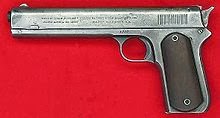
.38 ACP (Not the same as the .380 Auto) - Colt Model 1900


Well that is about it for the vast variation that is the 9mm cartridge. There are more variations that exist, I don't have the time to name all of them. The previous examples were the semi-automatic pistols. There are even more when you consider the revolver and rifle cartridges out there! 

So, this post should have pressed the importance of understanding the difference between 9mm cartridges. So when you have a dealer obviously being a smart ass about what kind of 9 you need. Tell them you want a "9mm, 9x19, 9x19 Parabellum, 9mm Luger and/or 9mm NATO". And don't say "clip" when referring to a magazine, then the smart ass question may be deserved.

So, until the next time, Remember to verify that you have the proper sized ammunition for your firearm before taking it to the range. Otherwise, this could happen:

Barrett M82 that has seen better days. Catastrophic failure time.

God Bless our America!

Tuesday, January 28, 2014

The Biggest Military Order Since WW2: Beretta 92FS Firearm Review

Beretta 92FS 9mm Parabellum: If you wish for peace, prepare for war.

"Nine millimeter Beretta, takes fifteen in the mag, one up the pipe, wide ejection port, no feed jams."
Danny Glover as Detective Roger Murtaugh in Lethal Weapon, 1987 Describing the Beretta 92FS


My previous post was about the oldest and one one of the most popular firearm manufacturers in the world. If you haven't read it, I am referring to Fabbrica D'Armi Pietro Beretta, or simply Beretta as they are more popularly known. Today's episode is all about their most prolific pistol design, The 92FS.

The 92 series is an old design which attributes to the quality of the firearms that we see today. The great grandfathers of the 92, the M1922 and M1951, were known for the open slide design and the falling locking block barrel design respectively.


Top: Model 1922 Bottom: Model 1951. You can see the gradual evolution towards the more recognizable design.

The next model, the Model 84 in .380, a compact pistol, brought about upgrades to the magazine system such as a direct feed to the chamber instead of having feed ramps which was a Beretta design, it also utilized the Browning "double stacked" magazine design to increase the capacity of the firearm.

The Model 84FS or "Cheetah" is still in production today for those who want a compact package.
A year after the advent of the little Cheetah, in 1975, The 92 series was officially born. Designed by Carlo Beretta and his team, production began on May 1976. The evolution of this series of firearms didn't stop there, however. The first 7,000 units, roughly, had the "step slide" design which had a slightly thicker portion of the slide around the action. The rest of the 52,000 total pistols had a the more familiar "straight slide" design. The next design, the 92S, brought the slide-mounted safety and decocker. The 92SB introduced the automatic firing pin block to prevent discharge when dropped.

Then the Military trials came in the late 1970's and Beretta  competed with other manufacturers for the contract to provide the United States military with their pistols to replace the M1911A1 as the primary sidearm. The 92F beat the other contenders once, then again after the Army contested the results and asked for a retrial. 1985 rolled around and saw the 92F as the contracted sidearm of the US.

The 92F was the only pistol to pass all of the trials, such as being exposed to -40 to 140 degrees Fahrenheit, immersion in salt water and endurance testing by firing 35,000 rounds without failure. It also helped that Beretta updated some design features: Parts were made 100% interchangeable to simplify and reduce the price of maintenance. Added the curve at the front of the trigger guard to help with aiming and accuracy. Curved the base of the grip to assist with aiming. Hard Chromed the inside of the barrel for corrosion resistance and ease of maintenance as well as reduce wear. Changed the coating of the slide from Blued Steel to the more durable Bruniton.

To this day, the 92FS, designated M9 by the US military, is the primary sidearm of soldiers, marines, seamen and airmen.

Now, let's go over the ins and outs of the 92FS and talk about some of the features.

So beautiful...

This is my 92FS. There are many like it but this one is mine. You can see some of the features that are well known to most people, even those who don't know Beretta.The frame is made of alloy and the slide is steel with a Bruniton coating to prevent corrosion and other damage. Some parts are polymer such as the recoil spring guide rod and the magazine release. Others, such as the trigger, the slide lock and the safety levers, are metal with polymer coating for added protection.


Here you can see the operation of the open slide design. The barrel is exposed for the most part, making for better feeding and extraction of spent cartridges. It also helps the barrel stay cool when firing, which is a good thing to ensure accuracy. Also notice the curves in the trigger guard and grip which help with maintaining a positive grasp on the firearm and ensuring accuracy. You can also see the beaver tail curve at the upper rear of the grip to allow your hand to engage with the grip and also protect your hand from getting "bitten" by the slide during firing. There are some really good serrations on the rear of the slide to facilitate easier slide manipulation. All of the controls are large to allow for easy manipulation with combat gloves being worn.


Another view of the open side design. You can see the direct feed on the barrel (the polished chute in front of the bullet) which allows for easier chambering of rounds. This bad boy runs smooth as butter.


The 92FS, like most full-sized firearms, takes advantage of a staggered round box magazine. Standard size magazines take 15 rounds, 16 if you count the extra one that you can load in the chamber. Some of your magazines can hold 16 rounds but they will not lock into place in the gun unless the slide is locked back. In that case, very simple, just lock the slide back, insert the magazine and release the slide lock. The slide moving forward will chamber the 1st round and you will have the other 15 still in the magazine. A word of warning and a myth to bust. The warning: Do not leave the magazine full past capacity. If you do so then you could damage the spring in the mag and then you would have a $10-$60 hunk of junk that doesn't feed rounds. The Myth: Provided they are not past capacity, you can leave magazines loaded for as long as you like. Many people, including myself, have left rounds in magazines from a few months to a few years with little to no negative effect on the magazines ability to feed ammunition. Also, I have yet to encounter ammunition that the 92 will not fire. I use Federal Jacketed Hollow Points as my defense rounds but I have used Winchester, Remington, Sellier & Bellot, Federal Premium, Blazer Brass, and Fiocchi. I have put a couple rounds of TulAmmo through it with no troubles but not enough, I feel, to be conclusive.


The 92FS has several safety features. In the image you can see the ambidextrous safety levers. The safety lever also features a hammer decocker. When the hammer is cocked, you can safely decock it by simply rotating the safety lever into the "safe" position with the red dot covered. The hammer drops at the same time the firing pin is rotated into a hidden position. This can be done safely with a round in the chamber. This is how I carry this firearm without a problem in a shoulder holster. With the safety engaged, you can pull the trigger all you like and nothing will happen. In addition to the safety lever, the gun is drop safe. Drop safe means that the only way to fire the gun is to pull the trigger. If the gun is dropped on its rear, the firing pin remains stationary and does not fire the round.  You can also see (kind of, it is the tab above the slide serrations in the bottom image) that the 92 series has a loaded chamber indicator. When there is a round in the chamber, the indicator shows a red strip for visual checks. You can also run your hand over the indicator to see if the gun is chambered in low light conditions. Another safety feature, the firearm is setup as a double/single action. What that means is that when you pull the trigger on the first round, it is difficult to pull. This feature helps prevent accidental discharge when being handled or carried. Once the first round is fired, the slide's movement rearward pushes the hammer back and locks it in place. From there on, the gun is in single action and has a much lighter trigger pull. This makes it easier to pull off follow-up shots but more unsafe to carry. This is were the safety/decocker comes in handy.

Sorry for the dark picture or you would be able to see the firing pin and how the decocker operates.


The 92FS features the typical 3 dot sights for easy alignment but they are fixed to the slide for reliability. The rear sight is high profile to allow for one handed operation of the slide. If one hand is injured or unavailable you can simply place the sights on your belt or a tabletop and press forward to operate the slide and chamber a round. The downside to this is that it is very difficult to upgrade the sights to night sights or higher profile sights to accommodate a silencer. I personally have no issues with the sights and I love having the fixed versus adjustable since you have to damn near run over the gun with a truck to throw the fixed ones off.


These engravings on the frame and slide give you all the information you need. The left side (top image)  tells you the manufacturer and where it was built while the right side (bottom image) tells you the model designation and caliber round designation. My gun is manufactured by Beretta USA Corp. in Accokeek, MD. Sadly, my Beretta isn't Italian made but, being a Patriot, I'm not that sad. lol. My model is 92FS in 9mm Parabellum as you can see in the bottom image. You can also see that there is a warning on the frame, stating that the firearm can discharge without a magazine in place. If you have a bullet in the chamber, and the safety disengaged, you can shoot the gun. You can also see the Beretta 3 Arrows grip logo with P. Beretta on the bottom in the middle photo.


The firearm is very simple to break down and field strip. As the picture shows, there is a lever above and forward of the trigger that is turned down. What is done is this: The slide is pulled back, I typically lock it in place with the slide lock. Once the slide is back fully, you depress a button on the side opposite of the takedown lever. While the button is pressed, you rotate the lever down. You can then disengage the slide lock while holding onto the slide to make sure that it doesn't accidentally fall off. You simply move the slide forward and off of the frame. From there, on the slide, you lift off the recoil spring and guide rod assembly. The barrel should then come loose from the slide. The firearm should look like mine above, and it is field stripped for your basic cleaning routine. I will make a blog (and possibly a video) at a later time to show how to completely strip and clean your 92.


These are just a few more images of what you will see once the firearm is field stripped. You can see the inner workings that go into the fire control and trigger group. This is not a terribly simple firearm.

At the range, the 92 is a very accurate. Thanks to the falling locking block barrel which keeps the assembly tightly in place, good groups are possible. That, in conjunction with the heavy firearm, the single action ability and the relatively light recoil of the 9mm round, make the 92 very easy to keep on target.

An old target from when I first got my Beretta. The range I typically go to only allows 25 yard minimum distance so I couldnt do any more accurate shots. I'm glad almost all of the rounds were on the target lol.

Unfortunately, at the moment, I don't have any footage of the range performance. That is a plan that will happen whenever Indiana decides that it wants to rise from the inner circle of Dante Alighieri's Inferno. It is just took damn cold to be out shooting right now sadly.

Well, I don't know that I have anything more to say about the Beretta 92FS. I would go on and on if I could but I am trying to keep things somewhat short so y'all dont get bored and leave me for someone younger. (End Ramble)

That is the Beretta Model 92FS. One of the most well known firearms in the world and the current primary sidearm of our armed forces. It is the second firearm I have ever owned but it will always be my favorite. If you have any questions, please let me know as I am still working on my blog posts and trying to set a good routine. Until the next episode, remember to keep the muzzle pointed in a safe direction whether it is loaded or not. It could save your, or someone else's, life. God Bless our America


For more information visit http://www.beretta.com/en-us/serie-92/