Sunday, February 16, 2014

I Need Some 9's: Okay, Sir, What Kind?


I have heard of this question and, sometimes, smart ass answer combination. It seems like some dealers like making people look stupid. On the other hand, it is, all the same, a valid question. In the picture above, you see 22 different types of ammunition that fall under the "9mm" category. Understandably confusing right? 99% of the time, when a buyer asks for 9mm ammunition, they are referring to #9 on the image: the 9X19 Luger or 9mm Luger. In this episode of Blued Barrel, we will discuss the history of the 9mm cartridges and how some of the more popular ones came about. Let's dive in.

If you are not familiar with ammunition and 9mm is just a number to you, then let's start there. Ammunition is measured in either imperial or metric caliber. For example: Here in the States, we measure our ammunition typically in inches. Therefore, you get ammo such as .38 .380 .50 .22 etc. The rest of the world uses the metric system which results in 7mm, 8mm, 9mm and so on. Both of these sets of numbers are measurements for the same thing: the diameter of the projectile in ammunition. When we refer to 9mm, we mean that the projectile is 9mm in width or .355 inches wide. The standard 9mm Luger was developed in Germany, thus the "mm" designation.

Most metric ammunition also has a measurement for the brass itself. For example: 9mm Luger is also known as 9x19. This means that the projectile is 9mm wide and the brass casing is 19mm long. You also have other ways of identifying ammunition. In addition to measurements, ammunition also may have an additional designation, such as: .380 ACP, 7.62 NATO and 9mm Makarov. These designations explain design features, what firearm they were designed for or what action they were meant to work with. ACP stands for Automatic Colt Pistol, NATO stands for North Atlantic Treaty Organization and is their standard ammo, Makarov is the 9mm cartridge that was designed specifically for the Russian Makarov pistol.

Now, with that all behind us, let's explore some more.

The number one 9mm cartridge (for the 23,565 time) is known as (get ready for it) 9mm, 9mm Luger, 9x19 Parabellum, 9x19, 9x19mm, 9mm NATO and 9mm Para. I'm sure I've left something out but you still should get the point.

The 9x19mm Parabellum, as it was first called by Georg Luger who designed the cartridge for the German Luger P.08. The company that Georg Luger worked for, DWM, gave the cartridge the "Parabellum" designation. Parabellum stands for "Prepare for War" which was part of the company motto: Si Vis Pacem, Parabellum. "If you wish for peace, prepare for war". Thus the 9x19mm Parabellum was born. The CIP (Commission internationale permanente pour l'épreuve des armes à feu portatives, or Permanent International Commission for Firearms Testing) was the organization to designate the cartridge as 9mm Luger and the name has stuck since then. Currently, the 9mm Luger is the most popular and prevalent military handgun cartridge in use today, according to Cartridges of the World. The effectiveness and low cost also attribute to the popularity to this day. Most all manufacturers have firearm models that utilize the 9mm Luger cartridge.

Luger P.08 1917

Another of the well known 9mm rounds is the 9x18 Makarov. This cartridge was designed along with the Makarov PM pistol to be specifically unusable by NATO forces during the later part of WWII and the Cold War. The Makarov round used a slightly larger diameter projectile along with the shorter casing to make it incompatible. This round was developed as a replacement for the Tokarev TT-33 semi automatic pistol and it's 7.62x25mm Tokarev round.

Tokarev TT-33


There is also the .38 S&W Special, one of the most popular revolver rounds since its inception in 1898. The .38 Spl cartridge was a replacement for the .38 Short Colt and .38 Long Colt, initially a black powder round that was switched to smokeless powder within a year of its design. From 1920 all the way up to 1990, this cartridge was used as a standard in Law Enforcement sidearms. This "9mm" cartridge is actually .357 inches wide, which leads me to...

Smith and Wesson Model 27 "The original .357 Magnum"

The .357 Magnum round also became a popular cartridge. Besides being the cartridge that started the Magnum era, It was designed with the .38 Special casing but had considerably more power at 100 yards than the .38 at the muzzle. Because of the closeness of the sizes of the rounds, there were problems with the .357 being used in the .38 firearms. This was a bad thing which could cause, shall we say, "catastrophic failures". Thus the .357 was given a slightly lengthened case, which allowed the underpowered .38 to be used in the .357 firearms safely, but prevented the inverse from happening, and thus the damage. This "9mm" round is widely touted as being a very powerful "Man-Stopper".

These are some of the most popular and well known 9mm diameter rounds, but here are some more along with the firearms that they were designed for/with...

9x18mm Ultra - Walther PP Super


.380 ACP (A.K.A., .380 Auto, 9mm Browning, 9mm Corto, 9mm Kurz, 9mm Short, 9×17mm and 9 mm Browning courto) - Walther PPK


9mm Glisenti - Glisenti Model 1910


.357 SIG - Sig Sauer P229


9mm Browning Long - FN Browning 1903


9x21mm - HK VP70Z


9x21mm Gyurza - SR-1 Vector


9x23mm Largo - Bergmann Mars pistol


9x23mm Steyr - Steyr M1912


9x25mm Mauser - Mauser C96


9x25mm Dillon - Most pistols that fire 10mm.

 
9mm Winchester Magnum - The Wildey


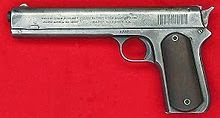
.38 ACP (Not the same as the .380 Auto) - Colt Model 1900


Well that is about it for the vast variation that is the 9mm cartridge. There are more variations that exist, I don't have the time to name all of them. The previous examples were the semi-automatic pistols. There are even more when you consider the revolver and rifle cartridges out there! 

So, this post should have pressed the importance of understanding the difference between 9mm cartridges. So when you have a dealer obviously being a smart ass about what kind of 9 you need. Tell them you want a "9mm, 9x19, 9x19 Parabellum, 9mm Luger and/or 9mm NATO". And don't say "clip" when referring to a magazine, then the smart ass question may be deserved.

So, until the next time, Remember to verify that you have the proper sized ammunition for your firearm before taking it to the range. Otherwise, this could happen:

Barrett M82 that has seen better days. Catastrophic failure time.

God Bless our America!

Friday, February 14, 2014

Constitutionally Correct: May Issue; Infringement?


Good day ladies and gents. I was pleased to hear about the 9th US Circuit Court of Appeals decision regarding one of California's gun laws this week. For those of you who are unfamiliar with gun legislation and attaining a permit to carry/purchase firearms, California is what is known as a "May Issue" state. "May issue" means that the applicant must demonstrate a "good reason" for carrying a firearm. "May issue" basically varies according to the whims of the local law enforcement. In Alabama (another May Issue state), residents are usually issued a permit very easily, so long as they meet the qualifications. Conversely, Maryland is a "May Issue" state as well, but without political or law enforcement connections it is nearly impossible to be issued a permit.

See what I meant by "according to the whims"? Within California, rural law enforcement is generally lax on the permit process, allowing most who meet the qualifications to have a permit to carry. Meanwhile in San Diego, it is nearly impossible to be issued a carry permit. The law itself states that applicants must "demonstrate good moral character", pass a training course and establish "good cause".

The problem with the May Issue method is that it can be used to infringe on the rights of citizens if it fits the opinion or agenda of the issuing party. In this case, San Diego county does not consider general self defense as a "good cause". You must submit documentation that establishes the "good cause" such as a restraining order or another excuse from law enforcement/court official. So, basically, if you just live in a bad part of town and want something more effective than pepper spray when going too and from the car, good luck.

Forgive my sarcastic approach to this, but I have to be honest, I am very glad that the 9th Circuit  Court of Appeals came to this decision. Whether another, larger panel appeals the decision, it means that the right of "effective" self defense is reinforced in the opinions of a growing number of citizens.

Well, that is it for this post. It was a short one, to the point, and I just wanted to review a current event. As a big time advocate for firearms for self defense, it makes me happy to know that some places are realizing that the best way for people to defend themselves against a criminal is to be able, if they choose, to carry a firearm in public.

On a side note, I hear that the weather should be improving soon. You know what that means? RANGE TIME! I am going to tear some stuff up so hard with my new additions. I will make sure to record the fun and report back.

Until the next episode, Remember to share the joy! Take a gun virgin to the range and teach them how to shoot. God Bless our America!

Wednesday, February 12, 2014

Why I Carry A Gun: Crazy People, Crazy People Everywhere.

Join a Gun Rights Advocacy group. I am a member of several, including NAGR. (The gun was safety checked before letting my finger touch the trigger.)
Good Day All. I was sitting around trying to think of a good topic to discuss this week and I was thinking about the places that I carry and why I purchased my first firearm. I really try to carry at all times, since, those that seek to do harm never rest. Some people carry every once in a while and some carry at all times, I am sitting right in the middle and only because my place of work has a metal detector when going in. But, before I go off on a tangent, I will share a few stories of where having a gun available, even when not used, has made me and those I live with safer, or at least be reassured.

When I first picked up my Hi Point C9 handgun for the cheap $125 new in box price, it was on the coattails of a few break ins at the apartment complex I lived in near Noblesville. A friend of the friends that I was staying with was at home when a man came to the door asking weird questions. Asking what they were doing, if they were going to be home later, etc. Of course, being good trusting people that they were, they thought nothing of it. When they came home later that evening, the entire place had been ransacked. The thieves stole a tv, video games and consoles, a cell phone, stereo, and various other items, including a handgun. Needless to say, they were devastated. And for the rest of the tenants, including us in our apartment, there was a gun in the hands of some bad men. The idea drove me to pick up my first gun.

 Like many first time gun buyers, I knew next to nothing about guns; not the difference between calibers, not how a blow-back operated pistol worked, not even the difference between a pistol and a revolver. I grabbed a box of 9mm at the guidance of a friend of mine and I felt nervous, but safer being at home. And for good reason. A few weeks after buying the gun, I was cleaning the apartment (two young men and a poor young woman lived there, poor girl) and I had the front door open so I could take the trash out. I was down the hall and heard a noise; thinking it was my roommates, I went to say "hi" but I stood looking at two young men, who I didnt know, who started to step into the apartment. I yelled "Hey!" and they turned and ran. Meanwhile, I went and grabbed my gun out of its hiding place and pocketed it. (as well as you can pocket a Hi Point pistol) For the next several minutes I continued to collect the trash and take it outside, with one eye on the door at all times.

Since that day, I have been more diligent about not leaving my home open to any prying eyes. I also practice as often as I can for the case of home invasions. I can have a gun in hand anywhere in the house within a few seconds. Which is good considering what happened not long after we moved into the house will currently live in.

My buddy bought a house off of 38th street in Indianapolis, not the greatest of neighborhoods but he was from the neighborhood nearby and used to the types of people that come and go. My girlfriend also moved in with me so we now had a young lady in the house to look after. So, 3 months after we moved in, my buddy got a call from the security company saying that the motion detectors at the house had gone off. Of course we all went home to see what had happened. It appeared that someone had gotten the back kitchen window open and came into the house through it (which is amazing considering the window is 7 feet off the ground). It also appeared that when they set off the alarm, they ran off, the only thing bothered was a bunch of empty liquor bottles on the counter near the window. When the police arrived, they had a K9 search the house to ensure that noone was there before we went in. Thankfully, the only thing that the K9 found was, apparently, a VERY tasty pillow from my room.

Of course, this helped us to rethink how we did things at the house. Everything is locked and checked before going to sleep and we even turn on the alarm when we go to bed. My roommate and I also have gotten creative with how we hide/ready our guns for defense. We have both practiced doing a sweep of the house from the front door and our bedrooms in the case of a break-in. Since the first break-in, we have had other attempts, unruly neighbors who started fights with people in the neighborhood, random people walking around behind the house at night. Basically, not the nicest place to live. The crazy neighbors have moved out (after the property owner evicted all 30 of them from the duplex), so that is a plus but we still have random, suspicious folks around.

My latest story involves my girlfriend: On Christmas Eve 2012, she was working the fine jewelry counter when a young man came in asking about a ring for his fiancee. For an hour she showed him around the rings, all kinds of shapes, sizes... and prices. She ended up showing him a $16,000 diamond ring. He looked at it for a while then turned tail and ran with the ring in hand. Of course, my girlfriend was understandably freaked out, even more so when, upon identification by police, she was told that he was wanted for armed robbery. We thanked our lucky stars that the man just ran instead of sticking around and bringing out a gun. Because of that episode, I have started to show my girlfriend how to use a handgun, despite her protests. (She is from California so that should explain a few things)

I don't say any of this to whine or cry about the state of things in the neighborhood. But I say it to show, exactly, why I own a firearm. Those that know me know that I am no street fighter. I would do my best to fight someone trying to harm my home and friends/girlfriend, but a 9mm Beretta pointed at someone's face just entertains a whole new level of seriousness that fists don't. As the quote goes, "God made Men, Sam Colt made 'em equal". It doesn't matter who your adversary is, a firearm puts you on equal terms with someone who intends to do you and your family harm. A bullet is as deadly to a body builder, as it is to a gangster, as it is to a computer nerd.

That is why, in a nutshell, I own and carry a gun. I haven't had to use my gun, thankfully, I haven't even had to pull it out of its holster. That doesn't remove the chance that I may have to use it in the future. I hope that time never comes, but should it come, I will be as ready and prepared as I can be. I will not be a victim if I can help it.

This wraps up this episode of Blued Barrel. If any of you read this and have a story for why you carry a gun, please share! Until next time, Don't hide your guns in between your clothes in the closet/dresser, it is one of the first places that thieves check during a break in. God Bless our America!

Friday, February 7, 2014

It's Called A Mosin In Russia: The Mosin-Nagant M1891/30 Bolt Action Rifle


The Mosin-Nagant series of rifles


Russia: The source of the "biker bitch" of rifles, the AK-47. The home of the Dragunov long range rifle. Also, the birthplace of the Mosin-Nagant series of rifles. This post will explore the history surrounding the Mosin-Nagant series, specifically the Model 1891/30 (hitherto referred to as "Mosin" with respect to Russia) and any and all information regarding the rifles that I can expose for you. Let's dive in.

My own M91/30. Featuring the 5 round stripper clips to facilitate faster reloading.

The Mosin is a bolt action rifle developed by the Imperial Russian Army between 1882 and 1891. The development story is similar to most regarding military firearms; The Mosin was born of a necessity to advance with and beyond the capabilities of the enemies of Mother Russia. This necessity was made evident by the Russo-Ottoman War of 1877-1878 which saw the Russians, armed with Berdan single shot rifles, slaughtered by the Winchester Model 1866 repeater rifles of the Turks. The terrific loss by the Russians forced the commanders to advance their arsenal.

A Turkish Irregular cavalry charging the Russian Infantry thanks to the V&A collections

Much like the trials for the M9 here in the States, the trials for the rifle series to replace the Berdan single shot were somewhat troublesome. There were 3 submissions to the trials: 1 from Captain Sergei Ivanovich Mosin, 1 from Belgian designer Leon Nagant and another from a Captain Zinoviev (which didn't end up making the cut). If it wasn't somewhat obvious already, the Imperial Army commanders were split between the Mosin design and the Nagant design. While the Mosin rifle was easier to perform maintenance on due to it's simpler design, it was built with less than adequate processes and parts. This led to the Imperial Commission selecting the Nagant rifle. Despite that selection, the Commission head, General Chagin, had tests further performed which demonstrated the advantages of the Mosin design. The Commission then accepted the Mosin as the future firearm of the Empire.

Belgian Leon Nagant holding the Nagant revolver.

Of course, the man in the above photo was a little miffed by the fact that he was chosen and then discarded by the Commission. Leon filed for international patent protection for the interrupter design of his rifle. Oddly enough, however, he got that design from Mosin's rifle and, as Captain Mosin was Russian Military and couldn't file for a patent on his design, was eventually paid the 200,000 rubles that was to go to the winner of the trials. Russia also did not initially refer to the rifle as the Mosin to prevent further debate from Leon Nagant. At the conclusion of the trials, Russia adopted the "Three Line Rifle, Model of the Year 1891" (3 Line refers to the caliber of the bullet. 1 line = .1 inches so 3 line is .30 caliber or 7.62)

Three Line Rifle, Model of the Year 1891. Also known as the M91

The M91, the first production Mosin rifle, ended up only utilizing 2 parts of Nagant's design. The first part, and the most important, was the magazine spring. The original Mosin design had a loose spring in the integrated magazine which was found to be easily lost during cleaning. Nagant's design featured an attached magazine spring which made retaining the spring, obviously, easier while cleaning. The other contribution by Nagant was the loading mechanism. While the fixed magazine can be loaded one round at a time, Nagant designed a method of using stripper clips with 5 rounds per clip which allows the gun to be loaded a little faster. The rest of the rifle was designed by Captain Mosin.

The top image shows the magazine spring and how it is attached to the floor plate. The 2nd from the top is a 5 round stripper clip. The bottom 2 images show how the stripper clip works by using the topmost round to press the other 4 into the magazine. The clip is then removed and firing may begin/resume.

Fun fact: Initially, the M91 was, of course, manufactured in Russia. Companies such as Izhevsk and Tula were responsible for many of the rifles. However, the Empire placed orders with Remington Armory and New England Westinghouse Company here in the states between 1915 and 1918. The New England Westinghouse rifles have the 1915 designation on the barrel regardless of when they were actually built. The pictures below show the stamps on the barrel.

Images courtesy of 7.62x54r.net

After the M91 came the first real "update". The Izhevsk Ordinance Factory, and later Tula Arsenal, in Russia developed improvements to the Mosin rifle to better serve the Russian mounted infantry; Cavalry troops of this time were known as Dragoons and thus the new design took the name and the M91 Dragoon was born. The Dragoon was shortened slightly by 2 1/2" for a total length of 48 3/4" to facilitate firing from the back of a horse. The Dragoon also had a similar model that was made by Izhevsk which is known as the Cossack. The difference between these models is that the Dragoon was sighted with a bayonet and the Cossack was never issued a bayonet. Also, with these models, they introduced the steel recoil crossbolt and changed the rear sights up slightly.

Then, in 1930, the M91 Dragoon was given further updates. The front sights were improved to the globe and pin over the original blade. The pictures below show the changes made. The globe was added to protect the post sight from being knocked out of alignment, an issue seen with the blade sight.

Images courtesy of 7.62x54r.net


The rear sights were also updated. The measurements were changed to meters instead of the earlier Arshini units of measurement. Another update was of the barrel bands. Instead of the solid bands that were featured on the Dragoon and the button retained bands, the new rifle utilized "split bands". In the images below, the left is the button band and the right is the split band.

Images courtesy of 7.62x54r.net


The last change to be made overall is the shape of the receiver. The original receivers for the Mosin series were hexagonal, but they were phased out in favor of the round shaped receiver in 1935-36. The pictures below show the difference between receivers. The rounded receiver is in the top image and the bottom features the hex receiver.

Images courtesy of 7.62x54r.net

This rifle that I've been describing is the "7.62 mm Rifle, Model of the Year 1891-30" or M91/30 as it is known here in the States. Now that you know a little about the history, let's go over the gun itself. A small disclaimer: Mosin rifles are products of both of the World Wars. As such, it is slightly difficult to pin down exactly what models have what features. Because of the needs of the wars combined with availability of parts and materials, the rifles often combine features. Moving forward, we are using my M91/30 manufactured in 1942 by the Izhevsk Ordnance Company. (as far as my research has shown lol)

Apologies for the somewhat lacking quality. I am learning how to use my camera lol.


The Russian Mosin is typically made of Birch wood for the stock and hand guards which surround a carbon steel receiver and barrel. The 2 piece stock/handguard is shellacked to preserve and protect the wood. With many Mosins quietly rusting in storage, they are also coated with a layer of a Vaseline-like substance called Cosmoline to further protect the rifle from moisture and corrosion. Luckily, mine had been cleared of all of the cosmoline when I purchased it. The stock and handguard shroud the majority of the barrel, leaving only a few inches behind the muzzle and leaving the receiver end bare as well. The stock and handguard are held together with split barrel bands which are then retained by springs. The integrated magazine is part of the trigger guard and holds 5 rounds. The triggers, like everything on the Mosin, can be varied. Mine is around 7.5 pounds, not too too bad. Also, the butt plate is the usual metal pad that prevents the stock from splitting. Your typical drink of cheap Russian vodka. Gritty to take down, kicks like a mule.

At first glance, it appears that the bolt is made of stainless steel because of the shiny white metal color. It is actually hardened carbon steel that has been polished to give it that color.


The bolt is a multi-piece design with 2 horizontal locking lugs at the forward position. The bolt can be easily removed for cleaning by opening the bolt and sliding it backward. While pulling the trigger, the bolt will slide free of the receiver.


The bolt can further be broken down to facilitate a complete cleaning regimen. As seen in the picture below from 7.62x54r.net


Another feature of the bolt is the safety. The cocking nob at the rear (#2 in the above picture) can be pulled back by hand and rotated counter clockwise to catch on a lip on the receiver. This is a very rigid safety and can be difficult to engage/disengage. In the images below, the top image is the fire ready mode and the bottom shows the cocking nob in the "safe" position.


The Russian Mosin's utilize the 7.62x54R round (displayed in the pictures below). The round has the distinction of being the oldest military cartridge in use today; since 1891 in fact. Considered the Russian 30-06, the Mosin rifles were actually designed for this round and vice versa. While not quite as powerful as the 30-06, it still is used to kill large bears. My administrator, Jesse, has put these rounds through 4 inches of concrete with little issue.


That about wraps up this edition of Blued Barrel. The M91/30 is my first ever bolt action rifle and it has left a great impression on me. The price tag on these bad boys can vary, usually between $80-$200 depending on condition, features and how the fellow selling it feels at the moment. The ammo is an even better deal. You can easily find a "spam can" of 440 surplus rounds for around $100. Good luck finding 22 LR for that price at the moment. All in all, If you want a nice piece of history that definitely goes BANG in a fun way, this would be the way to go.

Just a forewarning, at the suggestion of a friend of mine, you may see a Mosin torture test at some point down the line when we can get the funds for an extra. ;)

With that, I want to take the time to thank the people are 7.62x54r.net for the pictures and some of the information that I have gleaned from their pages. I knew a bit about the Mosin, but now I know even more! Also, with the vodka line in mind, Remember to never drink alcohol or take any other drugs before using your firearms or leave your firearms out around people who are under the influence of any. God Bless our America!

Tuesday, January 28, 2014

The Biggest Military Order Since WW2: Beretta 92FS Firearm Review

Beretta 92FS 9mm Parabellum: If you wish for peace, prepare for war.

"Nine millimeter Beretta, takes fifteen in the mag, one up the pipe, wide ejection port, no feed jams."
Danny Glover as Detective Roger Murtaugh in Lethal Weapon, 1987 Describing the Beretta 92FS


My previous post was about the oldest and one one of the most popular firearm manufacturers in the world. If you haven't read it, I am referring to Fabbrica D'Armi Pietro Beretta, or simply Beretta as they are more popularly known. Today's episode is all about their most prolific pistol design, The 92FS.

The 92 series is an old design which attributes to the quality of the firearms that we see today. The great grandfathers of the 92, the M1922 and M1951, were known for the open slide design and the falling locking block barrel design respectively.


Top: Model 1922 Bottom: Model 1951. You can see the gradual evolution towards the more recognizable design.

The next model, the Model 84 in .380, a compact pistol, brought about upgrades to the magazine system such as a direct feed to the chamber instead of having feed ramps which was a Beretta design, it also utilized the Browning "double stacked" magazine design to increase the capacity of the firearm.

The Model 84FS or "Cheetah" is still in production today for those who want a compact package.
A year after the advent of the little Cheetah, in 1975, The 92 series was officially born. Designed by Carlo Beretta and his team, production began on May 1976. The evolution of this series of firearms didn't stop there, however. The first 7,000 units, roughly, had the "step slide" design which had a slightly thicker portion of the slide around the action. The rest of the 52,000 total pistols had a the more familiar "straight slide" design. The next design, the 92S, brought the slide-mounted safety and decocker. The 92SB introduced the automatic firing pin block to prevent discharge when dropped.

Then the Military trials came in the late 1970's and Beretta  competed with other manufacturers for the contract to provide the United States military with their pistols to replace the M1911A1 as the primary sidearm. The 92F beat the other contenders once, then again after the Army contested the results and asked for a retrial. 1985 rolled around and saw the 92F as the contracted sidearm of the US.

The 92F was the only pistol to pass all of the trials, such as being exposed to -40 to 140 degrees Fahrenheit, immersion in salt water and endurance testing by firing 35,000 rounds without failure. It also helped that Beretta updated some design features: Parts were made 100% interchangeable to simplify and reduce the price of maintenance. Added the curve at the front of the trigger guard to help with aiming and accuracy. Curved the base of the grip to assist with aiming. Hard Chromed the inside of the barrel for corrosion resistance and ease of maintenance as well as reduce wear. Changed the coating of the slide from Blued Steel to the more durable Bruniton.

To this day, the 92FS, designated M9 by the US military, is the primary sidearm of soldiers, marines, seamen and airmen.

Now, let's go over the ins and outs of the 92FS and talk about some of the features.

So beautiful...

This is my 92FS. There are many like it but this one is mine. You can see some of the features that are well known to most people, even those who don't know Beretta.The frame is made of alloy and the slide is steel with a Bruniton coating to prevent corrosion and other damage. Some parts are polymer such as the recoil spring guide rod and the magazine release. Others, such as the trigger, the slide lock and the safety levers, are metal with polymer coating for added protection.


Here you can see the operation of the open slide design. The barrel is exposed for the most part, making for better feeding and extraction of spent cartridges. It also helps the barrel stay cool when firing, which is a good thing to ensure accuracy. Also notice the curves in the trigger guard and grip which help with maintaining a positive grasp on the firearm and ensuring accuracy. You can also see the beaver tail curve at the upper rear of the grip to allow your hand to engage with the grip and also protect your hand from getting "bitten" by the slide during firing. There are some really good serrations on the rear of the slide to facilitate easier slide manipulation. All of the controls are large to allow for easy manipulation with combat gloves being worn.


Another view of the open side design. You can see the direct feed on the barrel (the polished chute in front of the bullet) which allows for easier chambering of rounds. This bad boy runs smooth as butter.


The 92FS, like most full-sized firearms, takes advantage of a staggered round box magazine. Standard size magazines take 15 rounds, 16 if you count the extra one that you can load in the chamber. Some of your magazines can hold 16 rounds but they will not lock into place in the gun unless the slide is locked back. In that case, very simple, just lock the slide back, insert the magazine and release the slide lock. The slide moving forward will chamber the 1st round and you will have the other 15 still in the magazine. A word of warning and a myth to bust. The warning: Do not leave the magazine full past capacity. If you do so then you could damage the spring in the mag and then you would have a $10-$60 hunk of junk that doesn't feed rounds. The Myth: Provided they are not past capacity, you can leave magazines loaded for as long as you like. Many people, including myself, have left rounds in magazines from a few months to a few years with little to no negative effect on the magazines ability to feed ammunition. Also, I have yet to encounter ammunition that the 92 will not fire. I use Federal Jacketed Hollow Points as my defense rounds but I have used Winchester, Remington, Sellier & Bellot, Federal Premium, Blazer Brass, and Fiocchi. I have put a couple rounds of TulAmmo through it with no troubles but not enough, I feel, to be conclusive.


The 92FS has several safety features. In the image you can see the ambidextrous safety levers. The safety lever also features a hammer decocker. When the hammer is cocked, you can safely decock it by simply rotating the safety lever into the "safe" position with the red dot covered. The hammer drops at the same time the firing pin is rotated into a hidden position. This can be done safely with a round in the chamber. This is how I carry this firearm without a problem in a shoulder holster. With the safety engaged, you can pull the trigger all you like and nothing will happen. In addition to the safety lever, the gun is drop safe. Drop safe means that the only way to fire the gun is to pull the trigger. If the gun is dropped on its rear, the firing pin remains stationary and does not fire the round.  You can also see (kind of, it is the tab above the slide serrations in the bottom image) that the 92 series has a loaded chamber indicator. When there is a round in the chamber, the indicator shows a red strip for visual checks. You can also run your hand over the indicator to see if the gun is chambered in low light conditions. Another safety feature, the firearm is setup as a double/single action. What that means is that when you pull the trigger on the first round, it is difficult to pull. This feature helps prevent accidental discharge when being handled or carried. Once the first round is fired, the slide's movement rearward pushes the hammer back and locks it in place. From there on, the gun is in single action and has a much lighter trigger pull. This makes it easier to pull off follow-up shots but more unsafe to carry. This is were the safety/decocker comes in handy.

Sorry for the dark picture or you would be able to see the firing pin and how the decocker operates.


The 92FS features the typical 3 dot sights for easy alignment but they are fixed to the slide for reliability. The rear sight is high profile to allow for one handed operation of the slide. If one hand is injured or unavailable you can simply place the sights on your belt or a tabletop and press forward to operate the slide and chamber a round. The downside to this is that it is very difficult to upgrade the sights to night sights or higher profile sights to accommodate a silencer. I personally have no issues with the sights and I love having the fixed versus adjustable since you have to damn near run over the gun with a truck to throw the fixed ones off.


These engravings on the frame and slide give you all the information you need. The left side (top image)  tells you the manufacturer and where it was built while the right side (bottom image) tells you the model designation and caliber round designation. My gun is manufactured by Beretta USA Corp. in Accokeek, MD. Sadly, my Beretta isn't Italian made but, being a Patriot, I'm not that sad. lol. My model is 92FS in 9mm Parabellum as you can see in the bottom image. You can also see that there is a warning on the frame, stating that the firearm can discharge without a magazine in place. If you have a bullet in the chamber, and the safety disengaged, you can shoot the gun. You can also see the Beretta 3 Arrows grip logo with P. Beretta on the bottom in the middle photo.


The firearm is very simple to break down and field strip. As the picture shows, there is a lever above and forward of the trigger that is turned down. What is done is this: The slide is pulled back, I typically lock it in place with the slide lock. Once the slide is back fully, you depress a button on the side opposite of the takedown lever. While the button is pressed, you rotate the lever down. You can then disengage the slide lock while holding onto the slide to make sure that it doesn't accidentally fall off. You simply move the slide forward and off of the frame. From there, on the slide, you lift off the recoil spring and guide rod assembly. The barrel should then come loose from the slide. The firearm should look like mine above, and it is field stripped for your basic cleaning routine. I will make a blog (and possibly a video) at a later time to show how to completely strip and clean your 92.


These are just a few more images of what you will see once the firearm is field stripped. You can see the inner workings that go into the fire control and trigger group. This is not a terribly simple firearm.

At the range, the 92 is a very accurate. Thanks to the falling locking block barrel which keeps the assembly tightly in place, good groups are possible. That, in conjunction with the heavy firearm, the single action ability and the relatively light recoil of the 9mm round, make the 92 very easy to keep on target.

An old target from when I first got my Beretta. The range I typically go to only allows 25 yard minimum distance so I couldnt do any more accurate shots. I'm glad almost all of the rounds were on the target lol.

Unfortunately, at the moment, I don't have any footage of the range performance. That is a plan that will happen whenever Indiana decides that it wants to rise from the inner circle of Dante Alighieri's Inferno. It is just took damn cold to be out shooting right now sadly.

Well, I don't know that I have anything more to say about the Beretta 92FS. I would go on and on if I could but I am trying to keep things somewhat short so y'all dont get bored and leave me for someone younger. (End Ramble)

That is the Beretta Model 92FS. One of the most well known firearms in the world and the current primary sidearm of our armed forces. It is the second firearm I have ever owned but it will always be my favorite. If you have any questions, please let me know as I am still working on my blog posts and trying to set a good routine. Until the next episode, remember to keep the muzzle pointed in a safe direction whether it is loaded or not. It could save your, or someone else's, life. God Bless our America


For more information visit http://www.beretta.com/en-us/serie-92/